
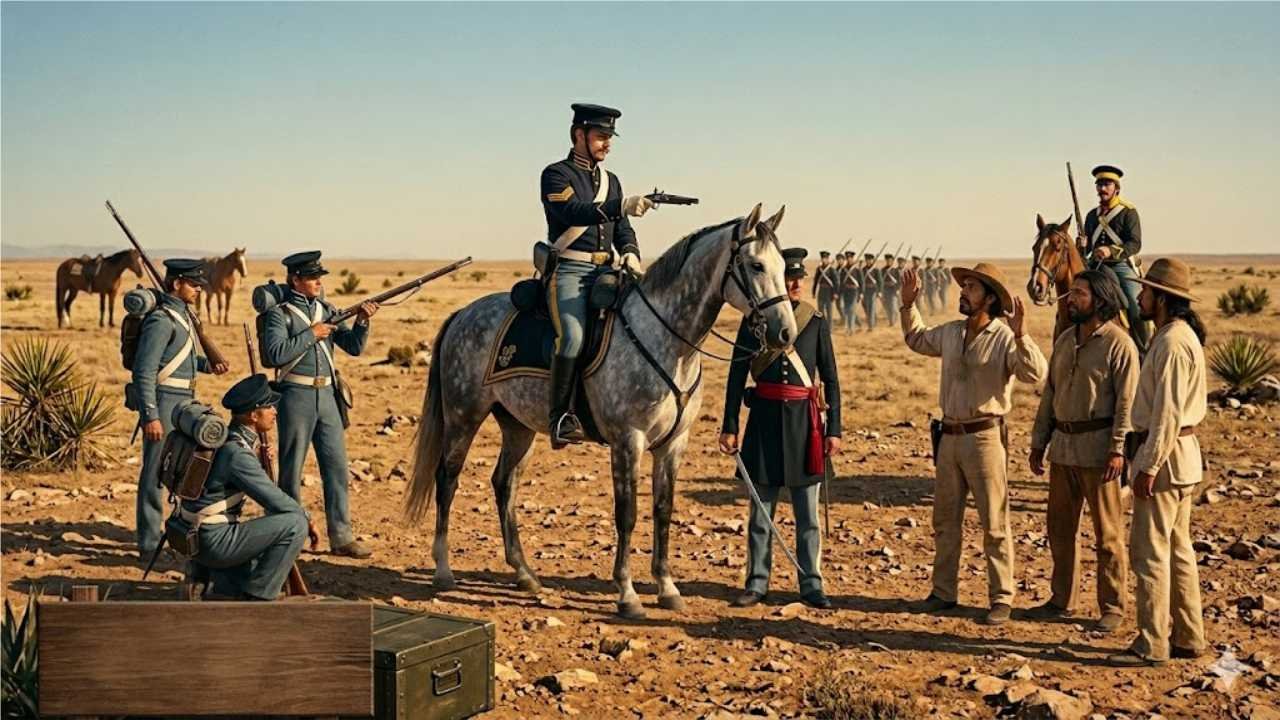
The New Mexico frontier during the Mexican period, 1821–1848 — a generation of broken agreements and escalating conflict.
Broken Promises: The Diné, the Mexican Period, and the Road to the Long Walk (1821–1863)
When Mexico won its independence from Spain in 1821, the Diné found themselves facing a new government with old problems — and when the United States arrived in 1846, the problems only multiplied. This is the story of forty years that made the Long Walk inevitable.
By 1821, the Diné had already lived through three centuries of Spanish colonial pressure. They had survived encomienda labor demands, slave raids, and a near-constant cycle of conflict with their neighbors. They had absorbed horses and sheep, developed one of the most celebrated weaving traditions on the continent, and maintained their language, clan structure, and relationship to Dinétah intact. They were, by any measure, a resilient people.
What they could not have known in 1821 was that the next forty years — the Mexican period and the early American territorial era — would bring a level of disruption that even three centuries of Spanish rule had failed to produce. The era that began with Mexican independence ended with Kit Carson's scorched-earth campaign of 1863 and the forced removal of the Diné people from their homeland. To understand how that happened, you have to understand this middle chapter — the decades of broken promises, shifting governments, and escalating violence that made catastrophe unavoidable.
Mexico takes over — 1821
When Mexico gained independence from Spain in 1821, the vast territory of New Mexico — including the Diné homeland of Dinétah — passed to the new Mexican Republic almost overnight. For the Diné, this change of flag meant little at first. The same frontier communities, the same patterns of raiding and counter-raiding, the same cycle of treaties signed and broken, continued largely unchanged.
The Mexican government, struggling to consolidate its authority over an enormous and poorly administered territory, had neither the resources nor the reach to fundamentally alter conditions on the New Mexico frontier. Colonial-era policies toward Indigenous peoples were nominally reformed — the word "Indian" was removed from the legal lexicon, and all residents of Mexican territory were theoretically equal citizens — but on the ground, these changes made almost no difference. Slave raiding continued. Livestock theft continued. Punitive military expeditions continued.
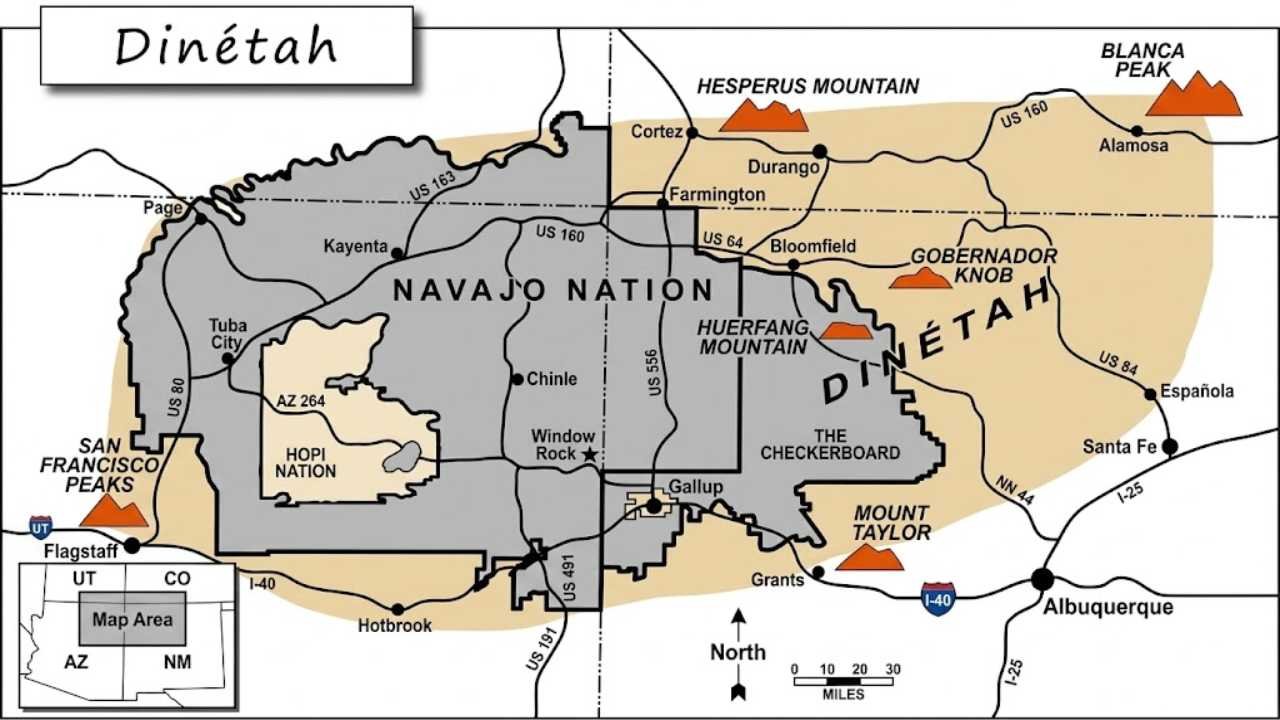
The New Mexico territory during the Mexican period — Dinétah sat on the contested western frontier, far from the colonial centers of Santa Fe and Albuquerque.
What the Mexican period did change was the scale and intensity of violence on the frontier. Without the Spanish colonial administrative structure — however weak — holding some pattern of order in place, raiding between Diné, New Mexican settlements, Pueblo communities, and other Indigenous nations intensified. Both sides suffered. Both sides raided. And both sides found the other's actions utterly incomprehensible from within their own frameworks of justice and property.
The problem of livestock and land
At the heart of the conflict between the Diné and their neighbors during this period was a fundamental disagreement about livestock — particularly sheep. By the early 1800s, Diné pastoral economy was centered on sheep herding. Large flocks were the measure of a family's wealth and security. When drought, disease, or population pressure reduced Diné flocks, raiding New Mexican settlements for sheep was not simply opportunistic theft — it was, within the Diné economic framework, a rational response to scarcity.
From the perspective of New Mexican settlers and ranchers, however, the same raids were criminal acts that threatened their livelihoods and safety. Punitive expeditions launched by New Mexican militias against Diné communities often struck the wrong people — raiding a peaceful community that had nothing to do with the original theft, taking captives, and destroying hogans and food stores. The Diné would then raid in retaliation. The cycle was self-reinforcing and seemed to have no exit.
"The raiding cycle between the Diné and New Mexican settlements was not simply lawlessness — it was the collision of two economic systems that had no common language for resolving disputes over property and justice."
Several attempts were made during the Mexican period to negotiate lasting agreements. Treaties were signed in 1819, 1822, and 1838 — and each one collapsed within months or years, for the same reason that Spanish-era agreements had always collapsed: Diné political life was organized around family groups and local leaders whose authority did not extend to binding other communities. A treaty signed by one group of Diné leaders carried no obligation for Diné people living in a different canyon system fifty miles away.
The United States arrives — 1846
In 1846, the United States went to war with Mexico. General Stephen Kearny marched into Santa Fe in August of that year, declared New Mexico a U.S. territory, and announced that the United States now assumed responsibility for protecting New Mexican settlers from "Indian raids." The Diné had not been consulted, had not been given any opportunity to respond, and had no say in the transfer of sovereignty over the land they had occupied for centuries.
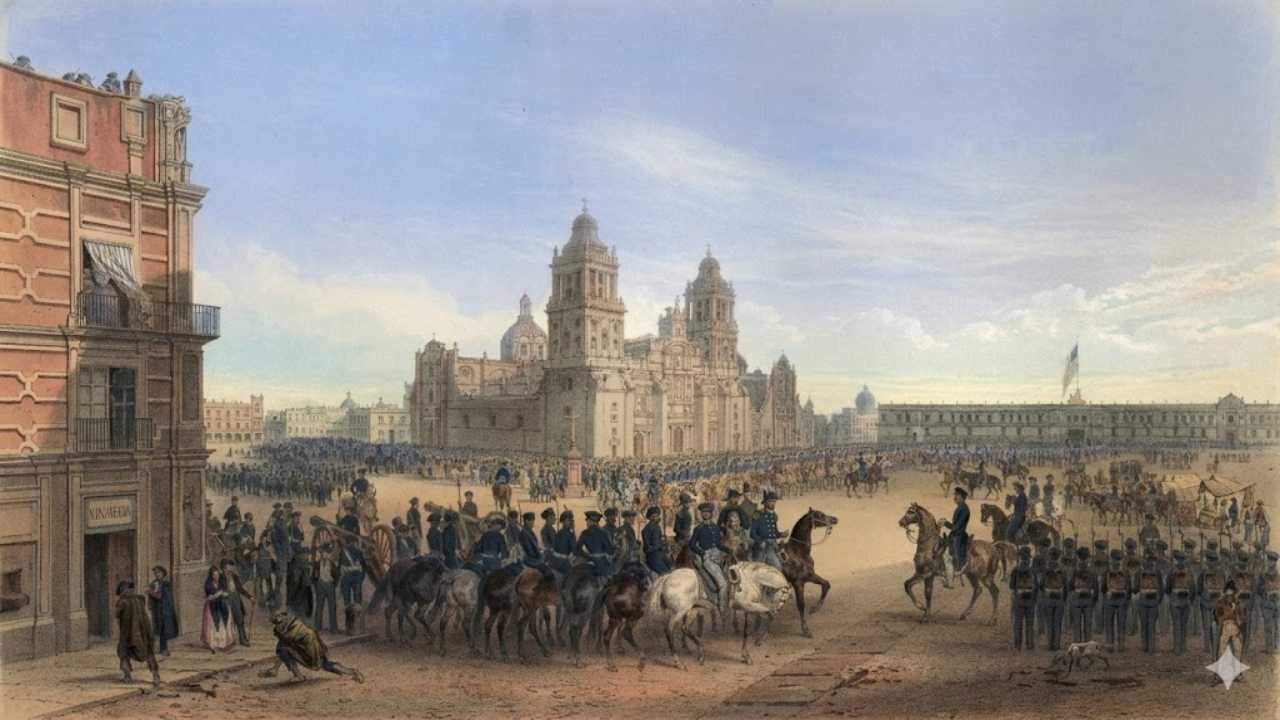
U.S. Army forces entered Santa Fe in August 1846, transferring New Mexico from Mexican to American authority — and placing the Diné under a new government they had never encountered.
The United States brought a new level of military organization and ambition to the frontier, but it did not bring a fundamentally different approach to the Diné. American officials repeated the patterns of their predecessors: negotiating treaties with whichever Diné leaders could be found, assuming those treaties bound all Diné people, and then responding with military force when raids continued.
The Treaty of Ojo del Oso, signed in November 1846, was the first formal agreement between the Diné and the United States government. It established peace, defined boundaries, and required the return of captives and stolen livestock on both sides. It lasted approximately six months before raiding resumed.
Agent Henry Dodge and a brief period of hope — 1853
Not all of this era was violence and failure. One figure stands out as a genuine exception: Henry Linn Dodge, appointed as the first resident agent to the Navajo in 1853. Dodge was unusual among American frontier officials in several ways. He learned enough Diné language to communicate directly without interpreters. He lived among the Diné rather than at a distant administrative post. He earned the trust of key Diné leaders including the respected warrior and diplomat Zarcillos Largos.
Dodge understood something that most of his colleagues did not: that the Diné were not a monolithic enemy to be defeated, but a complex society of family groups that could be engaged diplomatically if approached with respect and consistency. During his tenure, raiding decreased significantly. He established a blacksmith shop and — crucially — imported a Mexican silversmith, enabling Diné craftsmen to learn silversmithing directly. The project file confirms that before this intervention, only two or three Navajo silversmiths were producing their own work using traded silver. Dodge's initiative planted the seed of what would become one of the most celebrated craft traditions in the American Southwest.
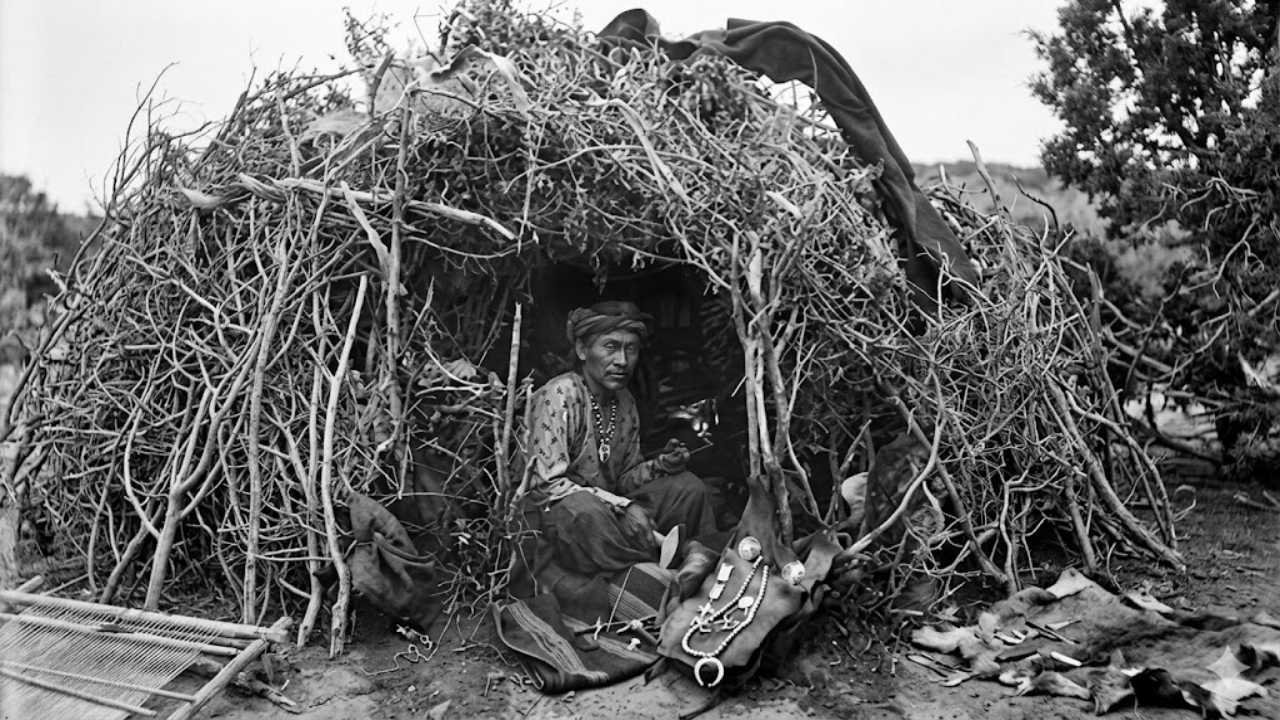
Agent Henry Dodge imported a Mexican silversmith in 1853 — planting the seed of the Diné silversmithing tradition that would flourish after 1868.
Dodge was killed by Apache raiders in November 1856. His death removed the one American official who had established genuine trust with Diné leadership, and the brief peace he had helped build began to unravel almost immediately.
The decade of war — 1858 to 1863
The years following Dodge's death saw a rapid deterioration in relations between the Diné and U.S. military forces. A series of incidents — including the killing of a slave owned by an Army officer at Fort Defiance in 1858, and a Diné attack on Fort Defiance itself in 1860 — escalated tensions to the point of open warfare. American military commanders increasingly concluded that the only solution was total military subjugation of the Diné people.
The man chosen to execute that subjugation was Christopher "Kit" Carson — a famous frontier scout turned military officer. In the summer of 1863, Carson was ordered by General James Carleton to force every Diné person to relocate to a reservation at Bosque Redondo in eastern New Mexico. Those who refused to surrender were to be treated as hostile. Carson's strategy was not primarily one of direct combat. It was a strategy of destruction — burning crops, destroying orchards, killing livestock, and eliminating the food sources that sustained Diné communities in Dinétah.
The centerpiece of this campaign was the winter assault on Canyon de Chelly — the sacred canyon system at the heart of Dinétah — in January 1864. Carson's forces moved through the canyon destroying everything: peach orchards that Diné families had tended for generations, winter food stores, hogans, and fields. With their food supply gone and winter closing in, thousands of Diné families had no choice but to surrender.
Before Fort Sumner, only two or three Navajo silversmiths were making their own buttons and perhaps a few bracelets using traded silver. The craft expanded dramatically after the return from Fort Sumner in 1868, becoming one of the defining economic and artistic pillars of Navajo Nation life. Agent Henry Dodge's 1853 initiative — importing a Mexican silversmith — was the direct origin of this tradition. (Source: navajo_nation_history.pdf)
By spring 1864, the Long Walk had begun. Groups of Diné men, women, children, and elders were marched more than 300 miles east to Bosque Redondo — a barren stretch of land on the Pecos River that would become the site of a four-year captivity. The captive population by 1864 was recorded at 8,570 people. Many others died on the march or remained hidden in remote parts of Dinétah.
The forty years from Mexican independence to Kit Carson's campaign had not been a straight line to catastrophe. There had been opportunities for a different outcome — treaties that might have held, administrators like Dodge who might have built lasting peace if they had lived and been supported. But the structural forces driving conflict — competition over land and livestock, the impossibility of binding all Diné communities to any single agreement, and the U.S. government's expanding ambition to control the entire Southwest — proved stronger than any individual effort at peace.
The Long Walk is the subject of the next post. But to understand why it happened, you had to understand this: forty years of broken promises that left both sides exhausted, angry, and out of options.
- Project file — navajo_nation_history.pdf: Only two or three Navajo silversmiths before Fort Sumner; Agent Henry Dodge imported Mexican silversmith in 1853; silversmith named Herrera learned the craft; Mexican silver coins used first after 1868; trading post at Ganado Lake 1871–72 (Charles Crary); captive population 1864 recorded at 8,570.
- General historical knowledge: Mexican independence 1821; Treaty of Ojo del Oso November 1846; General Stephen Kearny takes Santa Fe August 1846; Henry Linn Dodge appointed resident agent 1853; Dodge killed by Apache raiders November 1856; Fort Defiance slave incident 1858; Diné attack on Fort Defiance 1860; Kit Carson's campaign 1863; Canyon de Chelly assault January 1864; Zarcillos Largos; General James Carleton; Bosque Redondo.
- McNitt, Frank (1973), Navajo Wars — referenced in project file bibliography.
- Note: Canyon de Chelly referenced in historical context only. No sacred site details elaborated.
Test your knowledge — 5 questions
Click "Reveal answer" under each question to check your response.
Reveal answer
✓ Correct answer: C — 1821
Mexico gained independence from Spain in 1821, transferring authority over New Mexico — and the Diné homeland — to the new Mexican Republic.
Reveal answer
✓ Correct answer: C — Treaty of Ojo del Oso
The Treaty of Ojo del Oso, signed in November 1846, was the first formal agreement between the Diné and the United States. It lasted approximately six months before raiding resumed.
Reveal answer
✓ Correct answer: C — He imported a Mexican silversmith
Dodge imported a blacksmith and a Mexican silversmith in 1853, directly enabling Diné craftsmen to learn the craft that would become a celebrated pillar of Navajo Nation culture and economy.
Reveal answer
✓ Correct answer: B — Destruction of food sources
Carson's strategy was to destroy the food supply that sustained Diné communities — burning crops, destroying peach orchards, and killing livestock — leaving families with no choice but to surrender.
Reveal answer
✓ Correct answer: B — Only 2 or 3; Mexican silver coins used first after 1868
Before Fort Sumner only two or three Navajo silversmiths were making buttons and bracelets using traded silver. After 1868 Mexican silver coins were used first — obtained from Charles Crary's trading post near Ganado Lake in 1871–72.