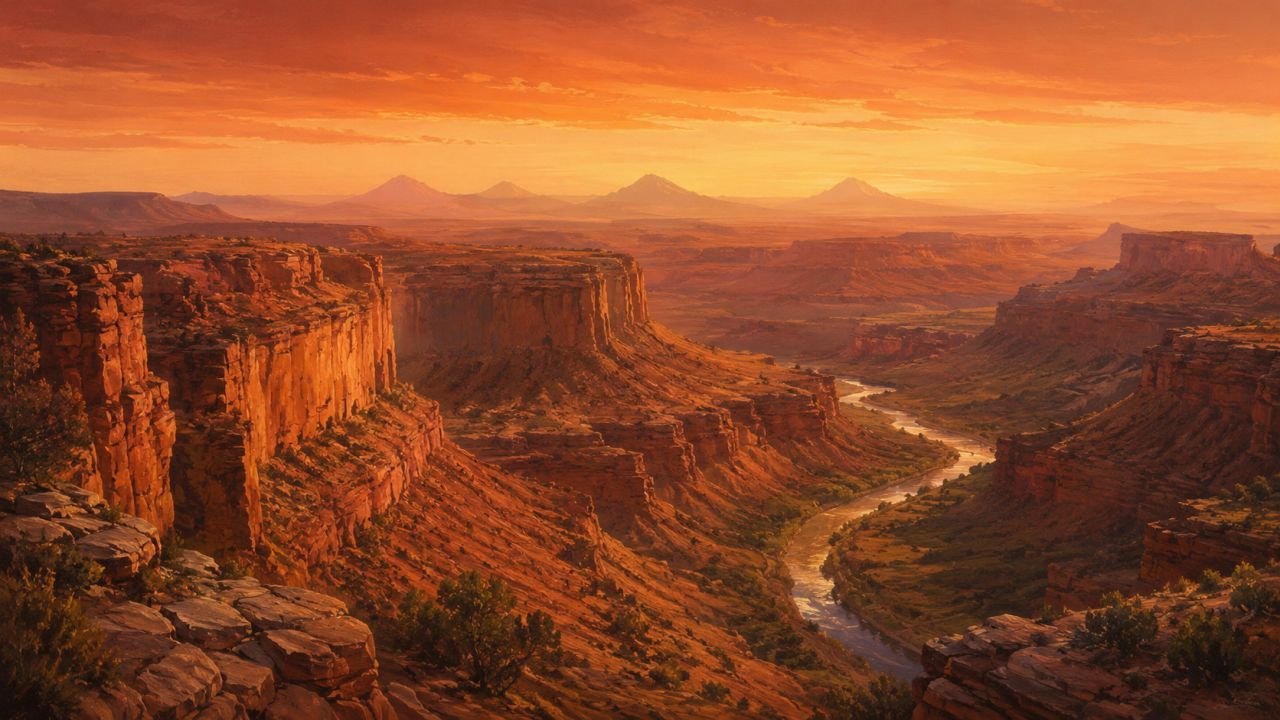
Four mountains · One people · A story that endures
Navajo Nation History — the full story of the Diné
From the ancient homeland of Dinétah to the 16-million-acre sovereign Nation of today, this site covers every era of Navajo Nation history with accuracy, original writing, and deep respect for Diné identity and culture.
16M
Acres — Navajo Nation today
1868
Treaty of return — Long Walk ends
6
Historical eras we cover
400k+
Diné people today
Why it matters
Why learn Navajo Nation history?
The story of the Diné is one of the most significant — and most overlooked — chapters in North American history. Understanding Navajo Nation history means understanding survival, sovereignty, and what it means for a people to remain rooted to their land across centuries of pressure.
▲
A story tied to the landDinétah — the traditional Diné homeland — is not just geography. Understanding it is essential to every chapter of Navajo history.
■
A story of resilienceFrom the Long Walk of 1863 to the Code Talkers of World War II, the Diné have shaped history while enduring forces designed to erase them.
◆
A living nation todayThe Navajo Nation is the largest Native American reservation in the U.S. Its history is not past — it is present, ongoing, and sovereign.
★
Accurate & originalEvery post on this site is written from primary sources — never copied, never compressed into a paragraph. Real depth, accessible to everyone.
What we cover
Key eras in Diné and Navajo Nation history
Six broad eras take you from the origins of the Diné in ancient Dinétah all the way to the modern sovereign Navajo Nation — each with dedicated posts, timeline entries and primary sources.

Before 1500s
The emergence of the Diné, the four sacred mountains, and a homeland unlike any other on earth.

1500s – 1821
How Spanish colonizers reshaped Diné life — and why horses and sheep changed everything.

1821 – 1863
A generation of conflict, shifting alliances, and broken agreements that set the stage for catastrophe.

1863 – 1868
The forced removal of 8,570 Diné people — a 300-mile march, four years of captivity, and the Treaty that brought them home.

Return, growth & self-rule
1868 – 1960s
From 3.5 million acres to 16 million — how the Navajo Nation grew, organized, and adapted across a century of change.

1960s – Present
Code Talkers, tribal government, economic development, and a sovereign nation navigating the twenty-first century.
Latest post
Start exploring
-
Who Are the Diné? The Origins of the Navajo People and Their Sacred Homeland
Daily Post #1 Era 1 — Origins · 6 min read Who Are the Diné? The Origins of the Navajo People and Their Sacred Homeland Long before the name “Navajo” appeared on any map, the People called themselves Diné — and they understood their place in the world through four sacred mountains, a creation story,…
-
When Two Worlds Met: The Diné and Spanish Contact in the 1500s
Daily Post #2 Era 2 — Spanish Contact · 7 min read When Two Worlds Met: The Diné and Spanish Contact in the 1500s The arrival of Spanish colonizers in the 1500s did not erase Diné culture — it transformed it. Horses, sheep, silver, and conflict reshaped the world inside Dinétah in ways that still…
-
Broken Promises: The Diné, the Mexican Period, and the Road to the Long Walk (1821–1863)
The New Mexico frontier during the Mexican period, 1821–1848 — a generation of broken agreements and escalating conflict. Daily Post #3 Era 3 — Mexican Period & U.S. Wars · 8 min read Broken Promises: The Diné, the Mexican Period, and the Road to the Long Walk (1821–1863) When Mexico won its independence from Spain…
-
The Long Walk: 300 Miles from Home — The Forced Removal of the Diné (1864–1868)
The Long Walk of 1864 — more than 8,500 Diné men, women, children and elders were marched over 300 miles from their homeland to Bosque Redondo on the Pecos River. Daily Post #4 Era 4 — The Long Walk & Fort Sumner · 9 min read The Long Walk: 300 Miles from Home — The…